 IMAS Metadata Catalogue
Jasus edwardsii
Type of resources
Topics
Keywords
Contact for the resource
Provided by
Years
-
Carbon and nitrogen isotope data for J. edwardsii lobsters from eight sites in SE Australia.
-
Business structure and costs for Southern Rock Lobster fisheries in Tasmania including fixed (vessels, infrastructure) and variable (bait, fuel, ports) costs.
-
The movement and behaviour of the Southern Rock Lobster (Jasus edwardsii) was monitored using a radio acoustic telemetry systems at two sites in eastern Tasmania.
-
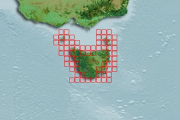
Southern Rock Lobster (Jasus edwardsii) biological data collected by observers on commercial boats and dedicated research trips incorporating information on sex, length, weight, damage, reproduction, bycatch, protected species interaction, location, depth, tagging and equipment type.
-
Southern Rock Lobster (Jasus edwardsii) that are about to moult or have recently moulted have reduced market value due to higher mortality in live transport, higher cannibalism and lower meat recovery. Limiting the landing of softer shelled lobsters is desirable to maintain product quality. The effects of several factors on durometer readings were evaluated: sex, temperature (ambient plus elevated 3°C), location (from around the coast), and size (carapace length). Individuals were collected across two regions South Australia and Tasmania.
-
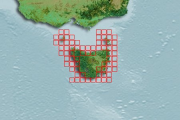
Describes the database used for storing Southern Rock Lobster (Jasus edwardsii) biological data collected by observers on commercial boats and dedicated research trips incorporating information on sex, length, weight, damage, reproduction, bycatch, protected species interaction, location, depth, tagging and equipment type.
-
This dataset comprises observations from four captive feeding experiments conducted at IMAS Taroona laboratories between 2020 and 2024. The experiments investigated predation by southern rock lobster (Jasus edwardsii) on the invasive long-spined sea urchin (Centrostephanus rodgersii) and the native sea urchin (Heliocidaris erythrogramma). Experimental conditions included live urchins, urchin roe, and trimmed urchins. This data is directly linked to the following publication: Jennifer E Smith, John Keane, Craig Mundy, Caleb Gardner, Michael Oellermann, Spiny lobsters prefer native prey over range-extending invasive urchins, ICES Journal of Marine Science, Volume 79, Issue 4, May 2022, Pages 1353–1362, https://doi.org/10.1093/icesjms/fsac058
-
Exploratory potting data (lobster and giant crab) collected as part of baseline characterization of the biota in Zeehan Marine Park shelf waters for Parks Australia. Data includes counts, size and sex information for all rock lobster and crab recorded as well as bycatch recorded in each pot deployment. Location (GPS coordinates) and depth (metres) are also recorded for each pot.
-
To test if the carapace length of lobsters changes during cooking, 21 legal-sized southern rock lobsters were collected in pots from Alum Cliffs, south-eastern Tasmania, Australia in October 1999 (42.95±S 147.35±E). The sample consisted of 7 female and 14 male lobsters ranging in carapace length from 106 mm to 153 mm (mean 120 mm). Each animal was abdominally tagged using individually marked t-bar tags (Hallprint T-bar anchor tag, TBA1; Hallprint Pty Ltd, 27 Jacobsen Crescent, Holden Hill, SA 5088, Australia). The carapace length of all lobsters were measured five times to the nearest 0.1 mm in a random manner, before and after processing. This repeated measurement of all specimens in random order was intended to evaluate measurement error. Processing was typical of that used commercially and involved killing the lobsters in fresh water before cooking in pre-boiling salted water for 12 minutes.
-
Characterisation of lobster (Jasus edwardsii) abundance and change in abundance at three different sampling sites (Cape Paul Lemanon, North Bay and Fortescue Bay) on the south-east coast of Tasmania, was assessed by GPS tracked SCUBA diver swims of 60 minutes in length whereby GPS was logged approximately every 5 seconds. Large tagged Rock Lobsters were introduced into one of the sampling sites, North Bay (which was closed to fishing). The swims are also being used to assess the impact of reef closure on the local lobster population.