
economy
Type of resources
Topics
Keywords
Contact for the resource
Provided by
Years
-
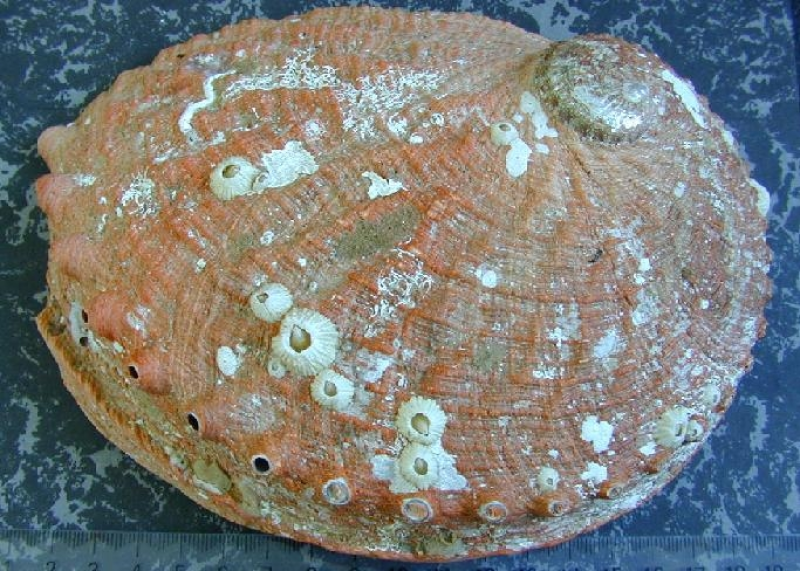
This project uses positional information from GPS loggers on abalone divers' boats and depth information from depth loggers attached to the divers for fine-scale spatial reporting of abalone fishing.
-
Business structure and costs for Southern Rock Lobster fisheries in Tasmania including fixed (vessels, infrastructure) and variable (bait, fuel, ports) costs.
-

This report provides an assessment of the social and economic status and performance of Tasmanian fisheries and aquaculture, 2017/18 to 2020/21. Tasmania’s fisheries and aquaculture sectors (i.e., commercial, recreational and Tasmanian Aboriginal businesses and users) are important parts of the Tasmanian economy and broader community and generate a diverse range of social and economic benefits. Achieving economic and social benefits from marine resources is an objective of fisheries and marine farming (aquaculture) management in Tasmania, as outlined in the Living Marine Resources Management Act 1995 (hereafter referred to as LMRMA) and the Marine Farming Planning Act 1995 (hereafter referred to as the MFPA). The indicators used in this assessment reflect this legislative objective as well as best-practice (for example, see NOAA Fisheries Socioeconomics, PIRSA Social and Economic Assessments). They were chosen to be relevant to managing sector-wide and community outcomes from these fisheries and aquaculture activities. This report does not attempt to benchmark performance. It is intended to inform industry and sector representative organisations, government agencies with policy and regulatory responsibilities, other marine research groups, and interested members of the Tasmanian community, of social and economic outcomes and change in those outcomes across time. This is the first assessment report of this type. It follows from an initial pilot assessment of Tasmanian fisheries (Ogier et al. 2018) and is intended to be one of a series. The period of time covered by this assessment (2017/18 - 2020/21) encompasses both the period prior to and across the COVID-19 pandemic. The impacts of the pandemic on economic and social indicators for these sectors is therefore captured. This assessment encompasses commercial, recreational, and Tasmanian Aboriginal community sectors using managed marine resources. The findings are based on a range of assessment and research activities undertaken by the Institute for Marine and Antarctic Studies (IMAS) of the University of Tasmania. Specific fisheries and aquaculture sectors assessed are: Tasmanian Abalone Fishery, Tasmanian Giant Crab Fishery, Tasmanian Rock Lobster Fishery, Tasmanian Scalefish Fishery, Tasmanian Scallop Fishery, Tasmanian Abalone Aquaculture, Tasmanian Pacific Oyster Aquaculture and Tasmanian Salmonid Aquaculture.
-
This data presents the economic contribution of six key fisheries and aquaculture production sectors to the Tasmanian economy. These six fisheries and aquaculture sectors are: - Tasmanian Rock Lobster Fishery; - Tasmanian Abalone Fishery; - Tasmanian Scalefish Fishery; - Tasmanian Salmonid Aquaculture; - Tasmanian Pacific Oyster Aquaculture; and - Tasmanian Abalone Aquaculture. The economic contribution of these fisheries and aquaculture sectors are measured through the following indicators: - Gross Value Added (GVA) - Contribution to Household Income - Number of persons employed - Contribution to the total full-time equivalent (FTE) workforce The work was undertaken by the Institute for Marine and Antarctic Studies at the University of Tasmania in collaboration with BDO and builds on the foundations and approach set out in 2017/18 National Fisheries and Aquaculture Industry Contributions Study (FRDC 2017-210). To generate the values for the indicators listed above, the framework recommended in Australian Fisheries and Aquaculture Industry: Economic Contributions Estimates - Practitioner Guidelines 2019 (IMAS 2020) was applied. For the analysis in this report, the contribution of immediate processing or farm gate retail activity is not included. The estimates are based on the best available information at the time of writing and apply input-output modelling (developed by BDO) that uses the economic profiles and conversion to basic prices as provided by IMAS. The study was conducted to contribute to the measuring and monitoring of the contribution of Tasmania’s seafood production activities to the economic prosperity and wellbeing of Tasmanians. Understanding the economic contribution of the seafood processing sector is a significant area for further research in advancing our knowledge of the economy broadly associated with fishing and aquaculture in Tasmania.
-
Verification of fisheries sustainability credentials is essential to increase consumer confidence, market access and community benefit. Sector performance currently centres on monitoring fish stocks and economic performance. However, markets and stakeholder organisations increasingly require traceable evidence of Environmental, Social and Governance (ESG) indicators such as provenance, safety, diversity, animal welfare, carbon, biodiversity to inform decisions. To meet this need, this project activates CSIROs Healthcheck ESG Fisheries data system by engaging industry and Indigenous leaders, management agencies and researchers to identify targeted indicators, collect data, prioritise data gaps to enable more comprehensive ESG reporting. The reporting system is designed to collect and report data which is ready for ingestion into existing catalogues and exchanges (e.g., Ag Food data Exchange). Data is compatible and interoperable for publishing to recognised sustainability framework reporting (e.g. Status of Australian Fish Stocks, Marine Stewardship Certification, National Fisheries Plan, UN SDGs, Taskforce for Nature-related Financial Disclosure, Australian Agricultural Sustainability Framework, Agricultural Innovation Australia (AIA) Environmental Accounting Platform), and ready for supplying relevant indicators and data for Australia’s Fisheries and Aquaculture Sustainability Framework development. We demonstrate the capability of this sustainability data reporting system with selected fisheries. New indicators address climate impacts and adaptation responses, food safety systems, modern slavery protections, sector-led initiatives to improve ESG outcomes, Indigenous sector participation and economic development, among others. Using and building new digital and LLM (large language model) technologies to identify, screen and verify data sources, the sustainability reporting data system reflects global standards in traceability of data itself. Data provenance pipelines provide a pathway for repeatable, routine data extraction and reporting, and increase data accessibility for the Australian fisheries sector. Construction of these pipelines has highlighted critical gaps to address and what actions to take to overcome remaining limitations on data accessibility and shareability for key ESG reporting areas.
-
Profit at full equity. ($AUD) Profit at full equity in fisheries refers to the profitability of all fishing businesses assuming that the businesses have full equity in their operations, meaning there are no outstanding debts associated with the investment in capital. This indicates financial status and performance of the fishery, based on the average performance of all firms in a fishery.
-
Presence of resource allocation policy or statute in the fishery jurisdiction (state/territory or Commonwealth) of operation. (%) Fisheries resource allocation refers to the process of determining how a shared fishery resource is divided among different users, such as commercial, recreational, and Indigenous fishers. The process is determined by the legislation (statute) or policy of a management authority with responsibility for managing that fishery resource.
-
Trend in average annual International Trade Price Index for imported fish (percentage change from previous year) The international trade price index describes the movements in price of imported fish products over time. Australian-produced wild caught seafood sold in domestic markets are sensitive to prices of imported fish. The majority of seafood consumed in Australia is from imported sources.
-
This record relates to outputs from a series of socio-economic surveys conducted nationally to benchmark awareness and perceptions towards the Australian Marine Parks. This includes a general public survey, a boat ramp survey (focussed on boat-based recreational users), a targeted survey (focussed on members of fishing, boating and yacht clubs) and a charter operator survey (focussed on fishing and eco-charter operators). All surveys were conducted across 2019-2020. Raw data could not be made available. Aggregated survey data is supplied as summary plots in the final report: https://www.nespmarine.edu.au/document/social-and-economic-benchmarks-australian-marine-parks
-
1. Workforce Tasmania’s commercial fishing industry workforce is defined as those people engaged in economic activity (work) within the sector across or at a given time, either in paid employment or self-employment. For fisheries this includes skippers and crew employed as sub-contractors and paid on a share of catch arrangement. It can include people engaged in unpaid work undertaken as part of these activities, although this has not been included in this assessment. Monitoring workforce changes is important because these changes indicate changes in social and economic benefits at a statewide and regional community level. Factors which affect workforce size include the extent to which a policy of maximizing technical efficiency is pursued through management, which typically reduces the fleet size and therefore the number of people employed. Other factors include the level of stock availability and access, the cost of entry into the fishery, and the financial profitability of fishing. Because of these factors, many fishers are engaged in employment in multiple fisheries or other marine sectors in order to supplement fishing incomes and pursue full-time employment. 1.1. Abalone The commercial harvesters catching abalone species operate within the Tasmanian Abalone Fishery. Assessment of workforce indicators is undertaken at fishery level. The data provided for this fishery is for the Tasmanian Abalone Fishery as a whole, which includes harvesting activity for this species as well as all other species caught in this fishery. 1.2. Commercial Dive species The commercial harvesters catching these species operate within the Tasmanian Commercial Dive Fishery. Assessment of workforce indicators is undertaken at fishery level. The data provided here is for the Tasmanian Commercial Dive species as well as all other species caught in this fishery. 1.3. Giant crab species The commercial harvesters catching giant crab operate within the Tasmanian Giant Crab Fishery. Assessment of workforce indicators is undertaken at fishery level. 1.4. Scalefish species The commercial harvesters catching this scalefish species operate within the Tasmanian Scalefish Fishery. Assessment of workforce indicators is undertaken at fishery level. The data provided here is for the Tasmanian Scalefish Fishery as a whole, which includes harvesting activity for this species as well as all other species caught in this fishery. 1.5. Scallop species The commercial harvesters catching species of scallop operate within the Tasmanian Scallop Fishery. Assessment of workforce indicators is undertaken at fishery level. 1.6. Southern rock lobster The commercial harvesters catching southern rock lobster operate within the Tasmanian Rock Lobster Fishery. Assessment of workforce indicators is undertaken at fishery level. 2. Workforce Indicators 2.1. Persons Workforce size (the total number of people directly employed) includes both skippers and crew, and those employed full time and part time. 2.2. Employment FTE The number of Full Time Equivalent (FTE) positions in each fishery is also estimated. This indicator shows that while a higher number of people may be employed in a fishery, some of these jobs may be part-time. Therefore, the number of FTEs is typically lower than the number of people in the workforce. In this iteration of the dataset, this value is unavailable for the abalone fishery in 2016, 2017, and 2019, and does not apply to the scallop fishery in any of the years available (2016-2020). 2.3. Active Supers The number of supervisors (skippers) employed in the fishery. 2.4. Harvest Units (TAS HP) The number of harvest units (combination of licensed vessel and fishing entitlement) active in a fleet and the number of people who actively harvest fish as supervisors (skippers) in a commercial fishery are directly linked to the size of the workforce in each fishery. In many cases, multiple supervisors may be linked to the same harvest unit, so the number of supervisors is often higher.
IMAS Metadata Catalogue