 IMAS Metadata Catalogue
The University of Western Australia
Type of resources
Topics
Keywords
Contact for the resource
Provided by
Years
-
This record provides an overview of the scope of the NESP Marine Biodiversity Hub project "Conservation status of tropical inshore dolphins". No data outputs were generated by this project. -------------------- This project reviewed current knowledge on Australia’s tropical inshore dolphins to inform future assessment of their conservation status. It focused on the Australian humpback dolphin (Sousa sahulensis), snubfin dolphin (Orcaella heinsohni), Indo-Pacific bottlenose dolphin (Tursiops aduncus) and the spinner dolphin (Stenella longirostris) complex. The project was undertaken as a desktop review of peer-reviewed literature, research projects and reports, including environmental impact assessments associated with major port developments from 2013 to 2019. It synthesised available information on species distribution, abundance, trends, habitat use, population structure and anthropogenic threats. The review found that knowledge had improved for several tropical inshore dolphin species, but was uneven across regions and species. Available data were largely concentrated in discrete study areas, limiting national-scale assessment. Identified threats included habitat loss and degradation associated with coastal development, bycatch in fishing gear and shark nets, and climate change impacts such as ocean warming, acidification and extreme weather events. Key recommendations included the use of scenario modelling and sensitivity analysis to support assessment of national population size and conservation status under uncertainty.
-
This data is from the 2021 'Seeds for Snapper' season which is a community volunteer seed based seagrass restoration program located in Perth, Western Australia. It details the effort that went into the collection of Posidonia australis seagrass fruit including number of divers, number of shore support personnel, volunteered hours, and fruit collection metrics (volume, estimated number).
-
These datasets compile rock physical properties from outcrops across the Bunger Hills oasis, Wilkes Land, East Antarctica, observed during the 2023–24 austral summer. Records include magnetic susceptibility (κ), radiogenic element concentrations (K, U, Th), and dry bulk density (rho), with station/sample identifiers, WGS84 coordinates, and per-record uncertainties. The compilation is intended to support regional geophysical interpretation and modeling, e.g., gravity-magnetic integration, crustal property mapping, and geothermal assessment. Data are provided as point observations without spatial interpolation. Dataset 'Petro_chem.xlsx' contains all insitu measurements in the field including calibration measurements (Start of the day: SOD, and End of day: EOD). Dataset 'DTC34-24_Sus_Density_HP.xlsx' contains density measurements on selected rock samples together with re-measured susceptibility and insitu co-located heat production measurements.
-
New ground-based gravity and GNSS data set collected at nine sites along a ~14 km transect across the Denman Glacier system during the Denman Terrestrial Campaign 2023/24. The survey was conducted along the existing ICECAP airborne geophysical flight line ASB/JKB2c/Y11b, enabling direct comparison between ground-based and airborne observations. Coincident GNSS observations are provided for precise station positions and ellipsoidal heights.
-
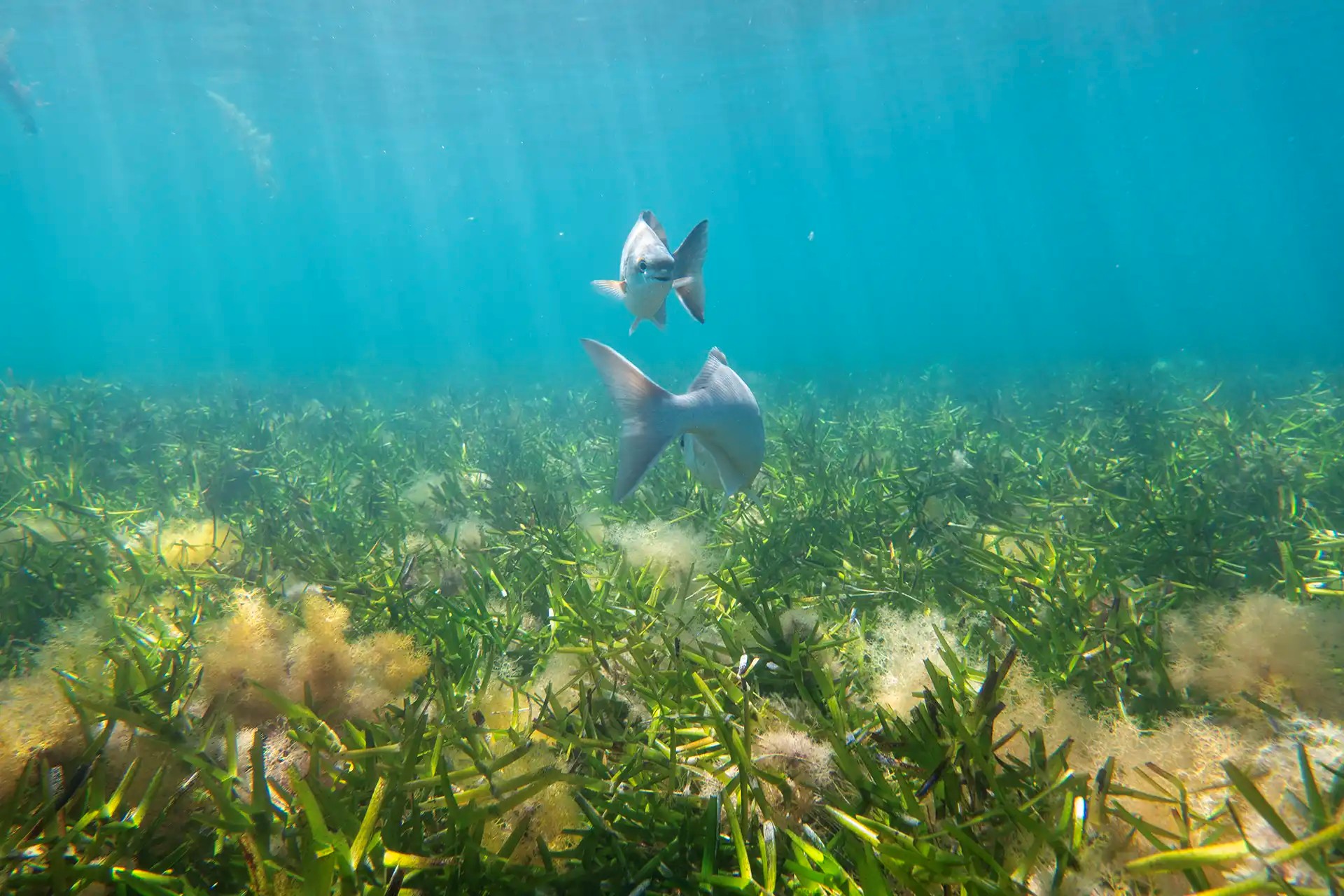
In March 2020, The University of Western Australia (UWA) and the Malgana Rangers transplanted by hand 36 pieces of Posidonia australis and Amphibolis antarctica into nearby restoration plots at Dubaut Point, Shark Bay. In March 2022 UWA went back to assess survival and shoot growth which is detailed in this dataset.