 IMAS Metadata Catalogue
Amphibolis antarctica
Type of resources
Topics
Keywords
Contact for the resource
Provided by
Years
-
Biodiversity assessments of invertebrates within seagrass (Amphibolis antarctica and Posidonia australis) transplant plots, compared to adjacent bare sand and healthy meadows at Middle Bluff, Dubaut Point and Useless Loop, Shark Bay.
-
Growth (shoot count) of Amphibolis antarctica and Posidonia australis following transplant to Middle Bluff and Dubaut Point, Shark Bay. Plants were transplanted by the Malgana people with assistance from UWA staff then assessed for shoot counts after 8 months.
-
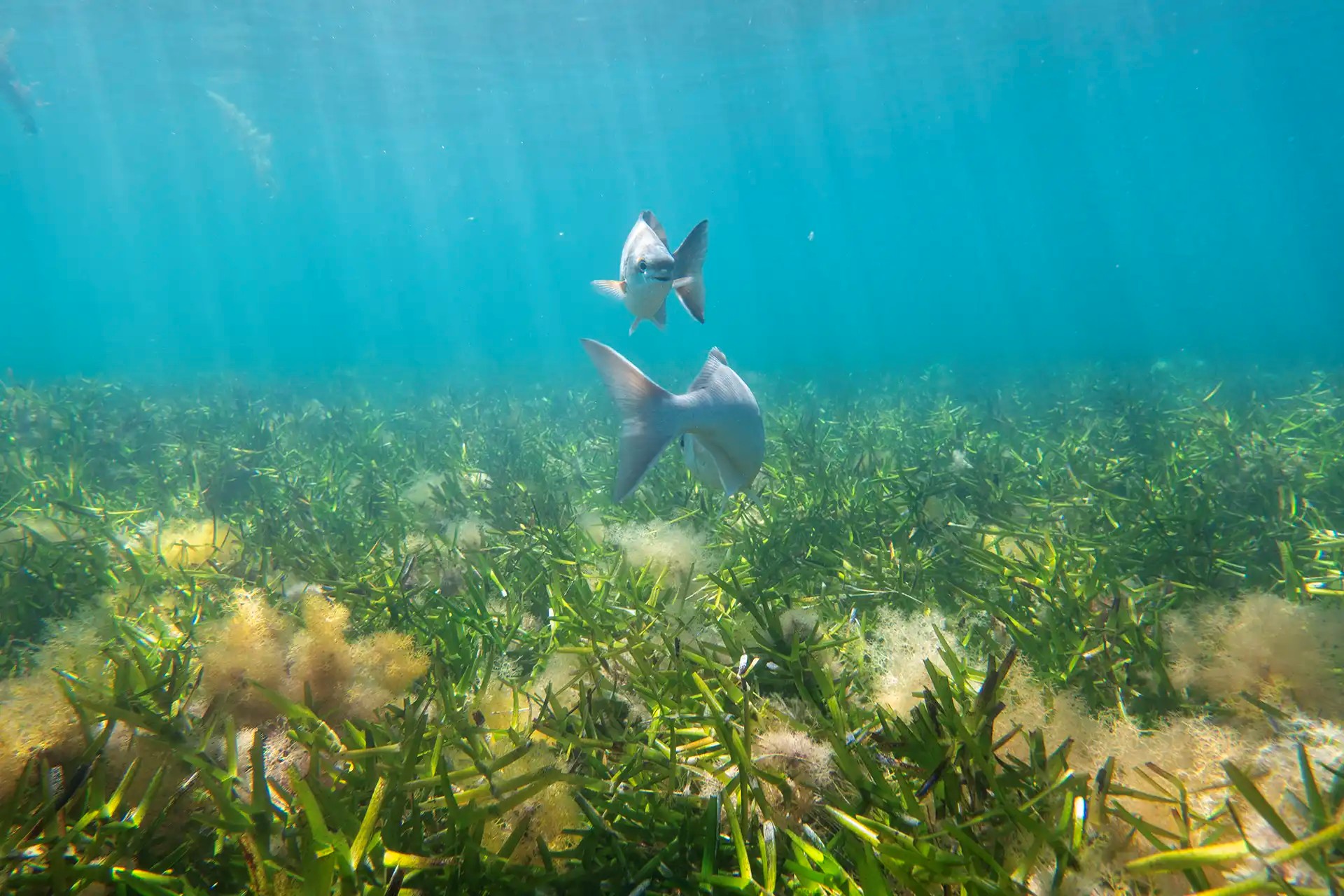
In March 2020, The University of Western Australia (UWA) and the Malgana Rangers transplanted by hand 36 pieces of Posidonia australis and Amphibolis antarctica into nearby restoration plots at Dubaut Point, Shark Bay. In March 2022 UWA went back to assess survival and shoot growth which is detailed in this dataset.
-
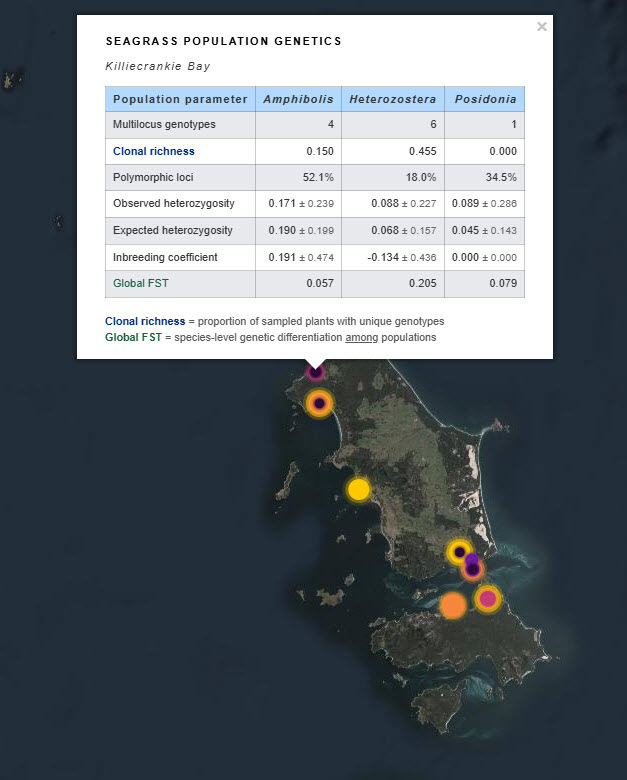
Seagrass beds are a dominant marine ecosystem of Tayaritja (the Furneaux Group of Islands) in the north-eastern waters off Tasmania. Historical coarse mapping has indicated extensive beds of Posidonia, Amphibolis, Heterozostera, and Zostera species, potentially comprising some of the largest and deepest seagrass extents found in temperate Australian waters. However, limited data on the distribution and ecological value of these seagrass habitats represents a significant knowledge gap in understanding Australia's wetland natural assets. This project mapped the extent, ecological composition, population structure, and blue carbon value of seagrass beds around Tayaritja, in partnership with the Tasmanian Aboriginal Centre. This record specifically describes the seagrass population genetics component of the project. Leaf tissue samples were collected from four seagrass species: Amphibolis antarctica, Heterozostera nigricaulis, Posidonia australis and Zostera muelleri. Samples were collected from multiple sites around Tayaritja Sea Country and processed for genome-wide SNP genotyping using the DArTseq platform. The dataset includes population-level genetic summary statistics, associated DArT metadata and reports, and raw sequence data used to support assessment of genetic diversity, clonality, population structure and connectivity among sampled seagrass populations. See the "Lineage" section of this record for full methodology. ***EMBARGO NOTE*** Data is currently embargoed until 31/12/2026. Please contact the NESP Data Wrangler (Southern node) to discuss access options: Emma.Flukes@utas.edu.au
-
Genomic sampling locations and meadow indices for ribbon weed (Posidonia australis) and wire weed (Amphibolis antarctica) in Shark Bay (Gathaagudu)
-
Changes in seagrass coverage in Cockburn Sound from 1967 to 1999 were assessed from aerial photographs using modern mapping methods with the aim of accurately determining the magnitude of change in hectares of seagrasses between 1967 and 1999.