 IMAS Metadata Catalogue
RMIT University
Type of resources
Topics
Keywords
Contact for the resource
Provided by
Years
-
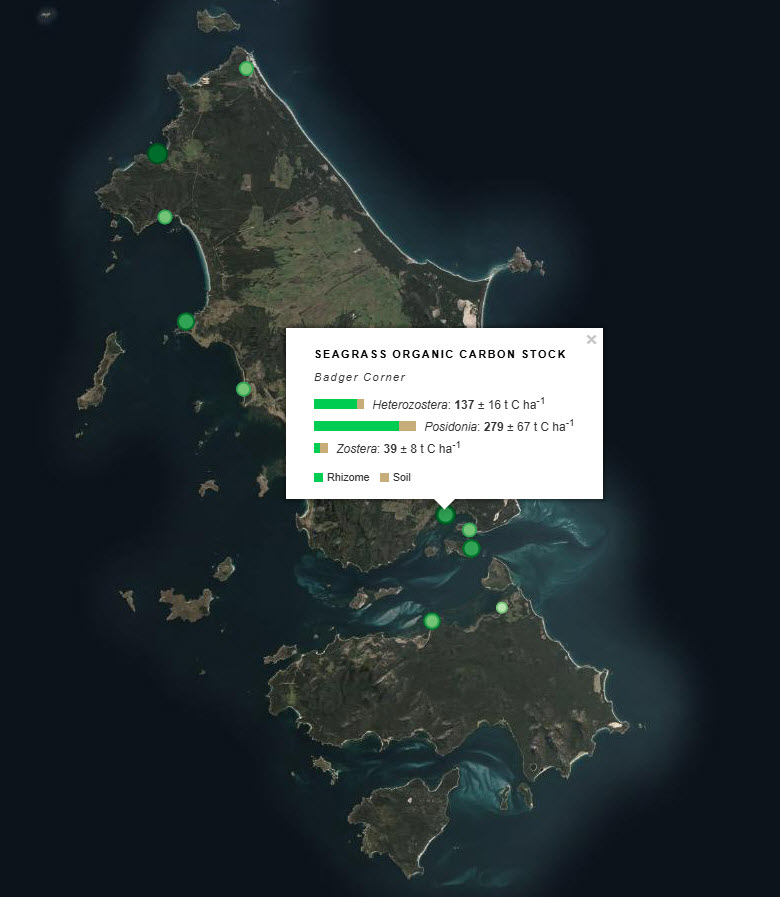
Seagrass beds are a dominant marine ecosystem of Tayaritja (the Furneaux Group of Islands) in the north-eastern waters off Tasmania. Historical coarse mapping has indicated extensive beds of Posidonia, Amphibolis, Heterozostera, and Zostera species, potentially comprising some of the largest and deepest seagrass extents found in temperate Australian waters. However, limited data on the distribution and ecological value of these seagrass habitats represents a significant knowledge gap in understanding Australia's wetland natural assets. This project mapped the extent, ecological composition, population structure, and blue carbon value of seagrass beds around Tayaritja, in partnership with the Tasmanian Aboriginal Centre. This record specifically describes the seagrass-associated blue carbon component of the project, supporting improved understanding of sedimentary carbon storage in the region. Sediment cores were collected from ten seagrass habitat sites around Flinders Island to assess spatial variability in carbon stocks and differences among seagrass species. Cores were collected to a maximum depth of 50 cm, or to the boundary between sediment and underlying rock, and were processed to estimate organic carbon stocks in below-ground sediment and plant material. The dataset includes sampling site locations, carbon stock estimates for the upper 50 cm of sediment, and measurements reported by depth interval within the core. At selected sites, samples were sieved to separate roots/rhizomes from the soil fraction, allowing carbon components to be reported separately where available. See the "Lineage" section of this record for full methodology. ***EMBARGO NOTE*** Data is currently embargoed until 31/12/2026. Please contact the NESP Data Wrangler (Southern node) to discuss access options: Emma.Flukes@utas.edu.au