 IMAS Metadata Catalogue
Global / Oceans | Global / Oceans | Southern Ocean
Type of resources
Topics
Keywords
Contact for the resource
Provided by
-
This Classification Catalog shows example images for all biotic labels used in developing the Antarctic Seafloor Annotated Imagery Database (AS-AID). This catalog represents a snapshot of the database at the time of publication of the associated data-paper. The labels used are based on the Australian Morphospecies Catalog, which is an extension of the CATAMI classification scheme. All underlying data are publicly available on Squidle+ (https://squidle.org). Up to 16 randomly selected images are presented for each classification, alongside a table with the following information: • Found in campaigns: a list of all campaigns in AS-AID in which this organism has been detected • Total annotations: the total number of annotations for this label • VME-taxa: whether this label is identified as a CCAMLR Vulnerable Marine Ecosystem taxa
-
δ18Oara profile for shelled pteropod calcification depth estimate based on seawater salinity and temperature measured by Argo floats. The oxygen isotopic composition of pteropod shells (δ18Optero) was compared to the δ18Oara at different depths. The calcification depth is defined as the depth where the values of δ18Optero and δ18Oara were equal within their respective uncertainties. Shelled pteropods are at risk from ocean acidification, with known effects on their shell durability and calcification. Pteropods typically form their aragonitic shells over specific depth ranges known as the ‘calcification depth’, which varies depending on species and habitats. Some Southern Ocean waters are already undersaturated with respect to aragonite and this could negatively affect shelled pteropods. However, the calcification depths of the pteropods have not been determined nor used to infer consequences of changing seawater carbonate chemistry in the Southern Ocean. In this study, we analysed the stable oxygen isotopic composition of Limacina rangii shells, collected by sediment traps in the subantarctic zone, to estimate their calcification depth. Shallow calcification depths (13-126 m) were detected in summer-autumn, while L. rangii calcified their shells deeper in the water column during winter-spring, with an average maximum calcification depth of 525 m. Recent shoaling of the aragonite saturation horizon is likely to negatively affect pteropods that calcify their shells in deep water. Such shoaling is likely to reduce shell formation and threaten population viability.
-
A compilation of existing literature on the characteristics of Southern Ocean diatom species.
-
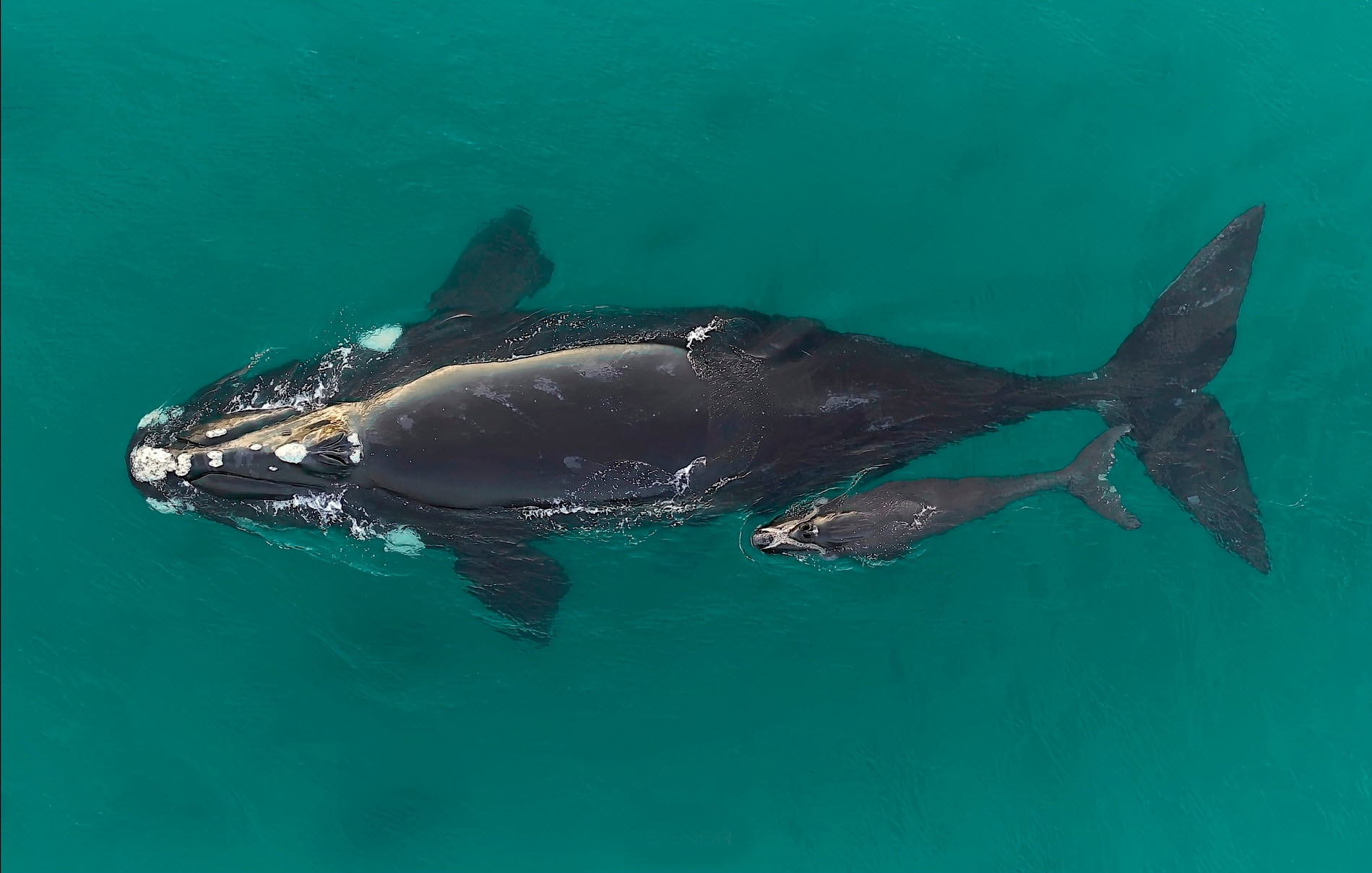
Aerial surveys of southern right whales (Eubalaena australis) were undertaken off the southern Australian coast to monitor the recovery of this endangered species following extreme 19th and 20th Century commercial whaling. The aerial survey was undertaken in the coastal waters from Perth (Western Australia) to Ceduna (South Australia) between the 12th and 17th August 2021, to maintain the annual series of surveys and inform the long-term population trend. The maximum whale counts for each leg of the survey flights between Cape Leeuwin and Ceduna, and consisted of a total 643 southern right whales sighted across the survey area (270 cow-calf pairs and 103 unaccompanied whales). The subsequent population estimate for the Australian ‘south-western’ population is 2,549 whales, which represents the majority of the Australian population given the very low numbers in the ‘south-eastern’ subpopulation. The population long-term trend data is indicating recent years (from 2007) are showing greater inter-annual variation in whale counts. To evaluate the recovery of the southern right whale population, it will be critical to collect long-term data on the annual variability in whale numbers related to the non-annual female breeding cycle and identify possible impacts on this by short-term climate dynamics, longer-term climate change and/or anthropogenic threats.
-
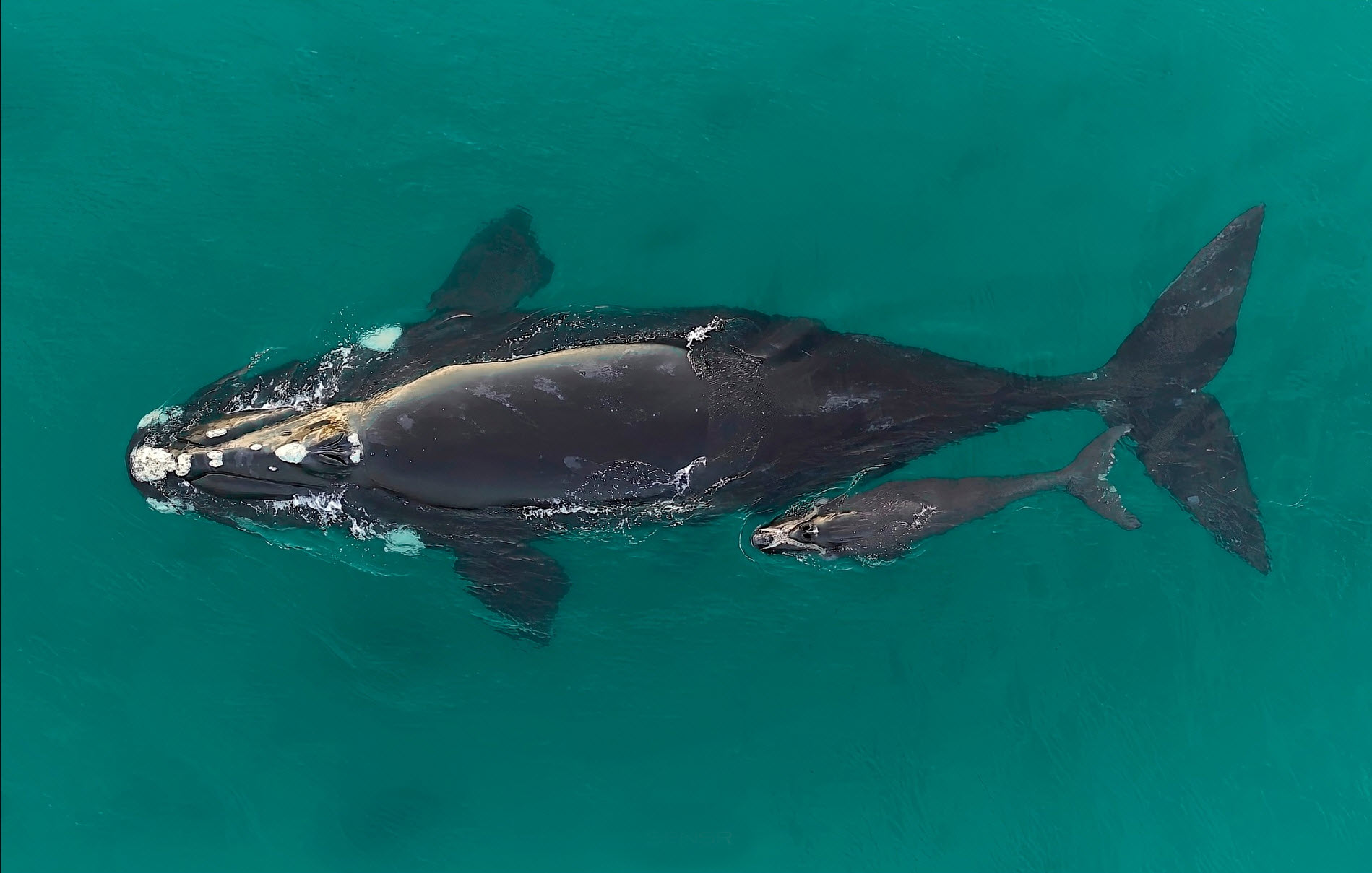
Aerial surveys of southern right whales (Eubalaena australis) were undertaken off the southern Australian coast to monitor the recovery of this endangered species following extreme 19th and 20th Century commercial whaling. The aerial survey was undertaken in the coastal waters from Perth (Western Australia) to Ceduna (South Australia) between the 12th and 19th August 2022, to maintain the annual series of surveys and inform the long-term population trend. The survey resulted in a total 526 whales sighted, consisting of 247 cow-calf pairs, 31 unaccompanied adults and 1 yearling. The ‘western’ population of southern right whales in Australian waters is increasing in size (~5.3% per year based on female/calf pairs and a population estimate of 2675 whales) based on the long-term population trend data from the annual aerial surveys. This represents the majority of the Australian population given the very low numbers in the ‘eastern’ population. The 2022 surveys recorded the lowest number of unaccompanied animals (i.e. males and females without a calf) ever throughout the time-series of the annual aerial surveys since 1993 when survey coverage between Cape Leeuwin and Ceduna first began. Across this time series, there is a particularly notable decline in sightings of unaccompanied animals over the past five years. It is currently unclear what factors account for the decline in these sightings or may influence the variation in numbers of unaccompanied animals on the southern Australian coast. Lower than expected counts in the long-term data may provide evidence of a slowing population growth rate, which can only be assessed by continued annual population surveys to assess population trend data.
-
This dataset is derived from a comparative study evaluating six DNA extraction methods for their efficiency in recovering diatom sedimentary ancient DNA (sedaDNA) from Antarctic marine sediments. Sediment samples were collected from two sites: U1536C (Scotia Sea, West Antarctica) and KC02 (Sabrina Coast, Totten Glacier Region, East Antarctica). Each of the six extraction methods was applied to the same set of samples. Following shotgun metagenomic sequencing, the methods were assessed based on metrics such as diatom DNA recovery, average fragment length, and taxonomic diversity. The purpose of the study was to identify the optimal extraction approach for maximizing the yield and quality of diatom sedaDNA, thereby improving its utility for paleoenvironmental reconstruction.
-
This data was curated and processed towards the development of a PhD manuscript entitled "High resolution bathymetry reveals the geomorphology and geological structure of the abyssal seafloor southwest of Tasmania" as part of an HDR candidature. The core dataset is multibeam bathymetry data from CSIRO/MNF RV Investigator voyages (IN2015_E02, IN2015_V01, IN2016_V02, IN2017_C01, IN2017_T02, IN2017_V01, IN2017_V02, IN2018_V02, IN2018_V04, IN2018_V05, IN2018_V06, IN2018_V07, IN2019_T01, IN2019_V01, IN2019_V02, IN2020_V08, IN2020_V09, IN2020_V10, IN2021_V01, IN2021_V02, IN2022_V03, IN2023_V01, IN2023_V02, IN2023_V03, IN2023_V04, IN2024_T01, IN2024_V02) and augmented with multibeam bathymetry data from the "50m Multibeam Dataset of Australia 2018" (Parums, R., and Spinoccia, M. (2018). 50m Multibeam Dataset of Australia 2018. doi: 10.26186/5c63832e3ed8e). These datasets were combined, cleaned and gridded as a single compiled 50 m bathymetric grid covering an area of ~170,000 km². From this core dataset, various derivatives (e.g. slope, curvature, aspect) were extracted and used to produce a structural geological and geomorphological characterisation of the abyssal seafloor study area ~500 km SW of Tasmania. This was achieved with the use of semi-automated characterisation techniques, including BRESS and GA-SaMMT. ***EMBARGO NOTE*** Data is embargoed until 31st November 2026 and will be made available following this date.
-
This dataset contains image annotations for 21 Antarctic research campaigns between 1985 and 2019, recorded as part of the Antarctic Seafloor Annotated Imagery Database (AS-AID). This snapshot of the AS-AID annotations comprises of a total of 632,252 expert annotations. Annotations are based on the Collaborative and Automated Tools for Analysis of Marine Imagery (CATAMI) classification scheme and have been reviewed by experts. Three annotation sets exist for each campaign: point grid annotations of 108 points per image, bounding box annotations for mobile fauna, and bounding box annotations for select benthic species which are classified as Vulnerable Marine Ecosystem species. All annotations are also accessible through Squidle+ by following this persistent link: https://squidle.org/geodata/explore/map?filters=%7B%22platform_ids%22%3A%5B%2222%22%5D%7D This dataset can be used to investigate species distributions, community patterns, provide a reference to assess change through time, and can be used to train algorithms to automatically detect and annotate marine fauna.
-
This dataset contains images from 21 individual Antarctic research campaigns between 1985 and 2019, collated as part of the Antarctic Seafloor Annotated Imagery Database (AS-AID). A total of 632,252 expert annotations are associated with these seafloor images. This dataset is a static snapshot of the AS-AID images at the time of publication of the data descriptor. All images are also accessible from https://data.imas.utas.edu.au/imagery/IMAS_Antarctic/ The dataset contains images and associated tracklog metadata for each research campaign.
-
At the inception of our project, no study had examined particle fluxes in the Subantarctic Zone (SAZ) of the Southern Ocean, despite the fact that the SAZ represents a large portion of the total area of the Southern Ocean, serve as a strong sink for atmospheric (~1G t C yr-1 [Metzl et al., 1999]), and is central to hypotheses linking particle fluxes and climate change [Francois et al., 1997; Kumar et al., 1995; Sigman et al., 1999]. The SAZ serves as an interface between the cold nutrient-rich waters to its south and the nutrient-depleted subtropical gyres to its north. SAZ upper layers are marked by a thick layer of relatively homogenous Subantarctic Mode Water (SAMW), which overlies Antarctic Intermediate Water (AAIW). Both water masses are subducted northward beneath the subtropical gyres. Thus particles leaving the surface in these regions contribute to carbon redistribution via both the fraction that reaches the deep sea by settling and the fraction that is remineralized within SAMW or AAIW and subsequently subducted. The SAZ exhibits surface water carbon dioxide partial pressures well below atmospheric equilibrium, but PFZ waters are closer to atmospheric equilibrium in this sector [Metal et al., 1999; Poppet al., 1999]. The relative physical and biological contributions to these carbon dioxide partial pressure variations are unclear, but it is important to determine them because physical and biological carbon dioxide transfers are expected to show different responses to climate change [ Matear et al., 1999; Sarmiento and LeQuere, 1996]. For these reasons we focused on the SAZ and, for comparative purposes, on the PFZ to its south. We measured particle fluxes using moored sinking particle traps at three sites in the SAZ, in the PFZ, and beneath the Subantarctic Front (SAF), which separates them. This record describes particle flux data collected between 2004 and 2005. The NetCDF data contains the following variables. Please note not all variables are supplied in all files, specifically there are not uncertainty estimates and no quality control flags for this data.