 IMAS Metadata Catalogue
SPECIES RECRUITMENT
Type of resources
Topics
Keywords
Contact for the resource
Provided by
Years
-
Kelp forests around the world are under increasing pressure from anthropogenic stressors. A widespread consequence is that in many places, complex and highly productive kelp habitats have been replaced by structurally simple and less productive turf algae habitats. Turf algae habitats resist re-establishment of kelp via recruitment inhibition; however little is known about the specific mechanisms involved. One potential factor is the chemical environment within the turf algae and into which kelp propagules settle and develop. Using laboratory trials, we illustrate that the chemical microenvironment (O2 concentration and pH) 0.0–50 mm above the benthos within four multispecies macroalgal assemblages (including a turf-sediment assemblage and an Ecklonia radiata kelp-dominated assemblage) are characterised by elevated O2 and pH relative to the surrounding seawater. Notably however, O2 and pH were significantly higher within turf-sediment assemblages than in kelp-dominated assemblages, and at levels that have previously been demonstrated to impair the photosynthetic or physiological capacity of kelp propagules. Field observations of the experimental assemblages confirmed that recruitment of kelp was significantly lower into treatments with dense turf algae than in the kelp-dominated assemblages. We demonstrate differences between the chemical microenvironments of kelp and turf algae assemblages that correlate with differences in kelp recruitment, highlighting how degradation of kelp habitats might result in the persistence of turf algae habitats and the localised absence of kelp.
-
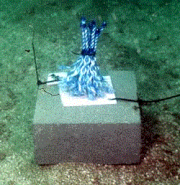
Community assembly in macrofauna communities developed in artificial kelp holdfasts was monitored at 1-month intervals over a 13 month period using a sampling design that used systematic patterns of temporal overlap and changes in start and collection dates. The hierarchical nature of the experimental design allowed several different approaches to analysis; by date of deployment and by date of collection of the artificial habitats, which enabled comparison of community assembly with and without the seasonal effects of the date of collection, and by community age to test whether there were alternative end-states to assembly depending on season or recruitment history.
-
Data accompanying Layton et al. 2019, Resilience and stability of kelp forests: the importance of patch dynamics and environment-engineer feedbacks. PLOS ONE. To explore how resilience and stability of kelp habitats is influenced by this habitat degradation, we created an array of patch reefs of various sizes and supporting adult Ecklonia radiata kelp transplanted at different densities. This enabled testing of how sub-canopy abiotic conditions change with reductions in patch size and adult kelp density, and how this influenced demographic processes of microscopic and macroscopic juvenile kelp.
-
Data describing post-recruit (adult) fish assemblages and the abundance of recruiting cryptobenthic species associated with 28 artificial reefs of different sizes and supporting different densities of transplanted kelp (Ecklonia radiata) off the west coast of Maria island. Adult assemblages were assessed using diver-based visual surveys conducted at three times (early: spring 2015, middle: autumn: 2016, late: spring 2016). At each time, 2 surveys were conducted, and the results were averaged. Recruiting cryptobenthic fishes were assessed using SMURF (standard Monitoring Units for the Recruitment of Fishes) collectors that were deployed for a six-week period in the centre of each reef on four consecutive occasions (November 2015 to March 2016).